It’s been a while since I’ve posted on this little blog I came to love. In August 2015, I made a commitment to spend 15 minutes everyday writing or doing some other form of creativity. The finished products were posted here.
When the year ended, a tiny little short story began growing into a novel, which I’ve spent the last 3 years writing and tweaking (and rewriting and retweaking). Here’s a section that is near and dear to my heart.
Aedaliegh of Arceldör Chapter 1, Part 2.
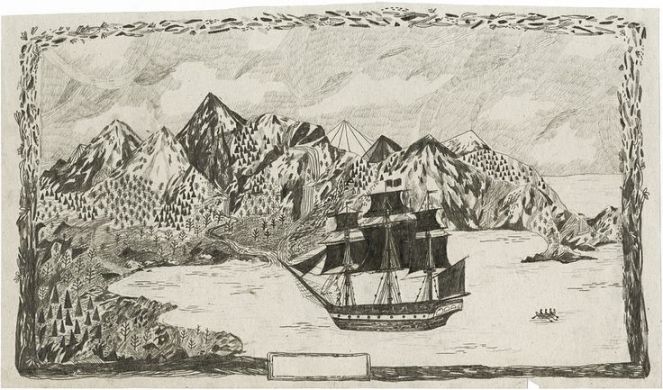
“Aedaliegh Van Hoeflich, I won’t tell you again. Stop fiddling with that bow and help me wash these clothes.”
Aeda looked up at her mother sitting on the other side of the room and groaned, “Ma, can’t it wait? I’ve about figured out how to fix it.” The string of her bow had snapped off the limb the day before, and she was currently trying to mend it by the fire. The evening before she had smoothed the top of the limb with sandpaper and created a new hole. Now all she had to do was reattach the bowstring. The bow was worn. It’s edges were smooth from wear, and the leather grip was slowly coming off, but Aeda couldn’t imagine giving it up. Her father had brought it home on her fifth birthday. He had walked into the house and immediately placed it’s pale wooden frame in her lap, her grin reaching to his ears.
Her mother had gasped. When her mother had asked him to get a bow for her birthday, she had simply meant for him to buy a nice pink ribbon- perhaps one made of silk- for Aeda to wear in her hair. But her father was a hunter, and his mind had immediately slipped into a daydream of teaching his only child to hunt alongside him in the forrest. He had not even considered another meaning. Aeda’s mother had been furious, but when she saw how her daughter had clutched the bow to her chest like one might hug a doll, she had shrugged her shoulders and simply let the matter pass.
“I’m almost done, and you had promised to help me. I won’t tell you again, so you best get your little legs over here.”
Her father was in the corner leaning against the hearth, sharpening stones for arrow points. His face reflected the bright orange glow of the fire. This was Aeda’s favorite time of the day. They would sit together by the fire and smooth pale wood into shafts and rocks into arrowheads. They were set to go hunting together after the harvest was over. She looked at him, silently begging for him to intervene- to tell her mother that she was allowed to stay right here beside him, but instead he leaned towards and whisper with a wink, “Go help your mother, little deer. I’ll see if I can’t finish your bow.”
Aeda sighed dramatically, but she knew there was no pointing in fighting with either of them. She handed her bow to her Father and dragged her feet to go and sit with her mother beside the table. She sat on an old wooden stool leaning over a large tub of water. Her father chuckled as Aeda sat down on the stool with a loud crash beside her mother.
She submerged her hands in the lukewarm, milky water and picked up the first piece of cloth her hands touched. Pulling the pale grey garment in and out of the water multiple times before beginning to scrub it against the water board. Her mother washed clothes like a musician might play a song, filling the house with drum beats made of swishing water and soaked cloth. Aeda fell in line with the rhythm made by her mother’s graceful, sun kissed hands. The fire crackled softly, and her father mimicked it sounds as her struck stone against stone. She could hear their neighbor singing an old country lullaby to her baby as she rocked him to sleep. This was melody of their every day, and it was her favorite song. The whole village came together under the stars and played their own kind of instrument.
Aeda looked at her mother, hunched over the basin of water. Her brow was furloughed, signaling that she had already lost herself in another thought. Aeda didn’t look anything like her mother. She had olive brown skin where her mother’s was a deep brown. Her mother was one tall tree of sharp angles, and she was rounded and sturdy like her father. Yet, everyone told her she was her mother through and through. Their outsides may not resemble each other, but their hearts were of the same mold. Aeda watched her mother stare into the fire, and she knew what what she was thinking.
Her mother never stayed in the present world for long. She was always trying to remember old stories, or dreaming about what the future might hold. The towns people knew her mother by another name: they called her Legende.
Aeda peered up at her mother through her lashes and smiled, “Before the mountains had begun to sprout and the rivers took their shape, the earth was but dirt, a void and lifeless expanse.”
Her mother opened one of her eyes, and smiled. The rhythm of her hands changed from a choppy drum beat to a slow serenade. Her mother’s steady voice rang out and began to paint pictures into the cold air above them. “In the heavens above dwelt the gods. One day, Adamos, the god of color, came across this blank expanse and he was saddened by it’s lack of beauty. He inquired of the gods as to whom it belonged, and when he found that it had no one. He fashioned for himself thirteen helpers – both male and female- to share in the creating with him. He gave each of his thirteen helpers blank canvases and colors with which to paint. He outstretched his arms and freed them to fill the canvases with beauty and wonder and joy- whatever they could think of. Floortje…”
Aeda’s mother stopped the story and opened her eyes, “I’m afraid I’ve forgotten their names. Would you help me?”
Aeda nodded gleefully, she knew the story by heart. She sat up straight over the bucket of water and tried to remember how her mother and told it, “Floortje began to paint the rose, with bright red petals and dark greens stems. Tuur made the Oak tree with it’s wide trunk and branches that stretch from one end of the forrest to the other.” Aeda paused, trying to remember the others.
“And Steren?” Her mother added, helping her through the story.
“Oh, yes. Steren crafted the mountains and valleys and Kalb drew all the beasts and animals like the squirrel and the moose. Even the wolf was his idea, though I don’t think he planned on them having teeth that sharp. Kalweh designed the most beautiful dresses and blouses so that they all looked like gods themselves. Oh, and then there Acker who drew tiny little seeds that grew into all kinds of vegetables and fruits. …. and then… and then….”
“Hulbrecht.” Her mother reminded her.
“Oh yes! Hulbrecht…. What did he do?
Hulbrecht saw a great mass of water, and so he formed the sea. And Wy painted rivers that flowed out from it.”
“That’s right,” interjected Aeda.” She put her finger on her mouth and bounced it on and off her lips. “Okay, so there’s also Miena, Acker’s wife, who filled the waters with fish. And then finally Blythe, who put the small little lights in the sky.”
“Very good.” Aeda’s mothered cooed, still scrubbing a blouse with soap.
“And when each of the thirteen…”
“You’ve forgotten one,” Aeda’s father chimed in from across the room.
“No I haven’t.”
“That was only twelve.”
Aeda and her mother both did a quick count of their fingers and Aeda realized indeed her father was right. She pinched her nose and squinted one idea, trying her hardest to think of who she had forgotten.
“I’ll give you a hint.” He father teased, standing up from his place beside the fire and joining them to finish the laundry. “We put it in our supper.”
“Thyme!” Aeda shouted. “The thirteenth was Thyme and he made all the herbs and spices.”
“I’m glad we remembered that one,” Aeda’s mother smiled. “Or else our dinners would be quite bland.”
They all let out a small chuckle, and her father took hold of her mother’s hand and smoothed his thumb over her palm.
“And when each of the thirteen,” her mother continued, “completed their designs, Adamos came and whispered life into the painting, and they moved out of the canvases and began to fill the dark world. Mountains rose from the expanse, and trees sprouted out from the dirt. Beasts began to roam the fields and vegetables were planted from food. But there was one of the thirteen who did not design anything for Adamos to finish. He name was…
“Ermelinda!” Aeda exclaimed. “Ermelinda only sat and watch as all the others spent everyday painting and drawing. So, Adamos came to her, and asked her why she wasn’t painting anything. And she said to him…
Aeda’s mother stood up from her stool and with a dramatic flourish, put her hand on her husbands should and pointed out the window. “I do not paint, my King, because I can not stop thinking of the creations my friends have already made. What if Floortje painted her flowers onto a tree of Tuur’s? What if Steren caused the earth to rise over Wy’s water? What could we create together? We work as thirteen, but what could we create if we worked as one?”
Her mother let out a big sigh and sat back down on her stool, and continued.
“Adamos saw what Ermelinda did. He saw the dogwood and the waterfall, though they had yet to be named as such.”
“And then, he told all the others that they should start working together to make even more beautiful things! They could work in pairs or in groups of three, four, five, or even six!”
“And why, my little deer, did Adamos ask them to do that?” Aeda’s father asked her.”
“Because he realized that they were stronger together?”
“And what did they create?”
“Well… Tuur and Acker created the apple tree. Floortje and Kalb painted the peacock. And I think Era and Hulbrecht created rain so that Acker and Thyme’s crops didn’t always have to be planted close to the rivers.”
“Well done!” Aeda’s mother exclaimed. “You’ll have replaced me in no time.”
“I could never.” Aeda blushed. “You finish Mama. The ending is my favorite part.”
“Oh very well. Finally, Adomas created the sun, and called it to rise in the sky and disappear for half the day. He declared that when it rose, the thirteen should toil and work, but when it sank beneath the earth, they should sleep and rest until it rose once more. And so the earth was filled with beauty and wonder, and they sat by the Sea as the sun sank beneath the earth. They ate of the fruits they had created with their own hands, and drank the wine of their own imagination. When the land was filled and their work was done, the thirteen came to Adamos and they asked what they were to do now. And Adamos told them, we shall enjoy what we have made.”
It was now Aeda’s father who stood. Assuming his most kingly stance, he spoke in a deep voice, “We shall enjoy what we have made. We shall work the ground and rule over the lands together. Each of you shall take a partner of their own, and we shall spread across the lands, each pair in charge a section. We shall watch over it with great care. We shall have children and we shall teach them to create and to rule, just as we will do.” And then he turned to Ermelinda and asked her to join him.”
Her father held out his hand to his wife and lifted her up off the stool to face him.
“Adamos offered his hand to the wise Ermelinda and asked her to stand beside him for the rest of the eternity. That very night the two were wed, and the twelve fashioned crowns out of gold and silver and placed them on their heads.”
Her mother placed a hand on her fathers check and whispered softly, “And so the two began to rule over the lands, and the twelve spread out amongst the them. Tuur and Floortje traveled to the forest and made their home there. Steren and Kalb took the the Northwest Mountains, and settled in a cave. Holbrecht and Wy built the first ship, and lived on the sea, and traveled the rivers. Acker settled south of the sea, where the soil was rich, and Miena went with him. His brother Thyme, and his wife Kahweh, settled just east of him, at the bank of the mountains. And finally, Blythe and Era settled in the eastern valley just before the castle where Adomas and Ermelinda dwelt, watching over the lands from their castle on Jhoeksteen Mountain.
They called the realm “Arceldör” for it was pleasant place filled with beauty and ruled in goodness. And so, they began to build their homes and have children to fill them. Their children married with one another, and had children of their own, and the land of Arceldör was filled with life and beauty, and people to revel in it.”
Her mother took Aeda’s head, and drew it to her. For a moment, they stood their together hands and hearts joined together. The neighbor’s baby began to cry, and it broke the still, quiet moment.
“Little deer,” whispered her father, “its time we went to bed. We all need rest for tomorrow. Let’s try and shut our eyes.”
Her mother picked up her crutches off the floor and maneuvered her way to standing. One of her crutches slipped beneath her weight, knocking the wash basin over and covering the dirt floor with the milky water.
Her mother groaned, beat the dirt, and then laughed. “You think after six months I’d have figured out how to use these things.”
“Go on to bed, you two.” Her Father said, helping her mother off the floor. “I’ll clean this up.”
Her mother’s newfound disability didn’t seem to bother her parents as much as it did Aeda. Tears began to roll down her face, and Aeda could bear it no longer. She ran to her bed and flung herself down on the mattress, covering herself completely with blankets as the tears continued to fall down her cheeks. Her mother held a hand up to her father, and followed her to the bed. As gently as one might pull off a cloth that’s been covering a wound, she pulled back the blankets covering Aeda’s face.
“Mother,” Aeda choked out quietly, “Do ye really think Adamos and Ermelinda are happy with the way things are now? If they created the lands and animals to be good and beautiful, then why, “Aeda paused and sucked in a breath before letting it all spew out. “why does winter make people sick? And why do the wolves steal our livestock? Why does the land not give us enough food to make our bellies stop grumbling? Why does the King work us so hard and pay us so little?”
The magic in the story had run out, and Aeda could here the cracks forming in her mother’s voice. “So many questions my love, and all of them good ones, but let’s leave them for another night when the harvest is over. Tomorrow, we shall celebrate and dance and tell stories the whole night. And I promise to answer all the questions you can think of.”
“Tomorrow then.” Aeda sighed. And she fell asleep dreaming of what it would be like to live under a king like Adamos.
 It’s that day again… the day I bake scones, drink coffee with friends and celebrate two wonderful writers whose works cultivated a love for myths in me at an early age. C.S. Lewis, author of The Chronicles of Narnia, and J.R.R. Tolkien, author of The Lord of the Rings, met on this day over ninety years ago. Shortly thereafter, Tolkien sent Lewis an epic poem he had written. It was filled with lore and myth and the fantastical realm, passions they both shared. Lewis returned the poem several days later with notes, critiques and even suggestions for how Tolkien could make his lines flow better. Can you imagine actually critiquing Tolkien? It sounds almost absurd. But Lewis did, as well as passing along one of his own poems. And so began a small community revolving around this idea of sharing and critiquing one another’s works. You might know them as the Inklings.
 rebekah.eckard